Ready to Trip?
Create your private profile and get your travel insights.
Create Your Profile Privacy-first. Fast sign-up.
A trip runs from the day you arrive to the day you leave, and both days count.
March 1 to March 14 is a 14-day trip, and a trip can start and end on the same day. A length counts from the start date, so “2 weeks from March 1” ends on March 15 and shows 15 days.
Trips can’t be open-ended. For the trip you’re on, set the end date you expect and change it later.
Dates are calendar days at the trip’s destination, with no time of day, so they read the same in every time zone. While today falls within a trip, it’s your current trip and carries a Current label. A planned trip shows on your map and in your trip list right away, and counts toward your statistics once it begins. Days count up to today.
When you move on, end one trip and start the next on the same day, which then counts for both. A trip that starts within two days of the previous one ending gets a line on your map.
Trips that share more than one day get a warning in your trip list.
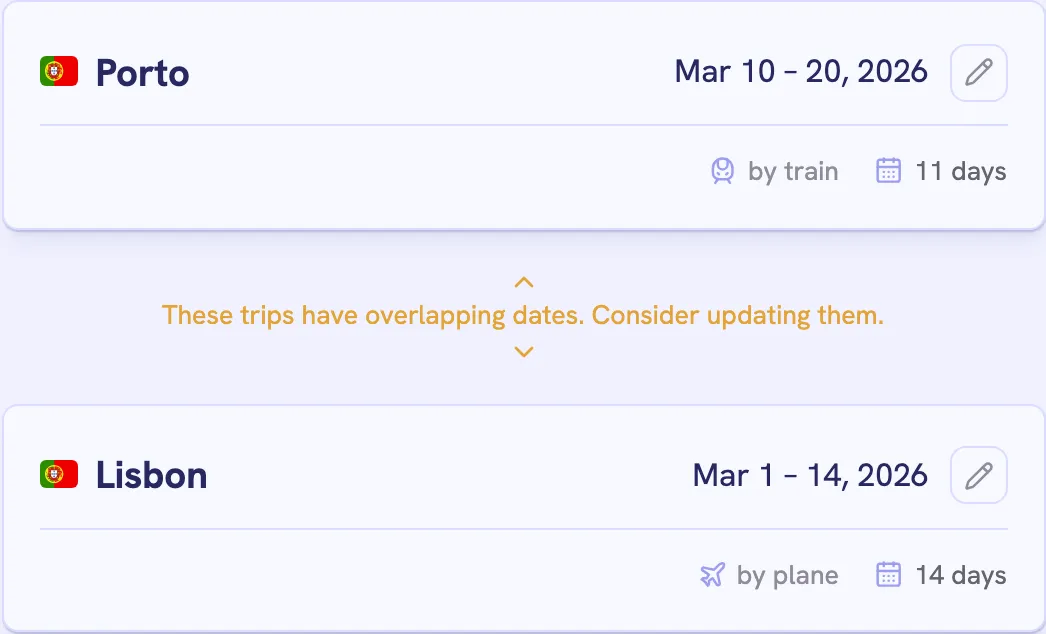
When half or more of your trips overlap, your profile hides its statistics until you fix the dates.
Only the trips you add count. If you live in Melbourne and spent ten days in Auckland in June, that makes three trips: Melbourne until you left, Auckland, and Melbourne from the day you came back. Home trips also keep your distance statistics realistic.
Create your private profile and get your travel insights.